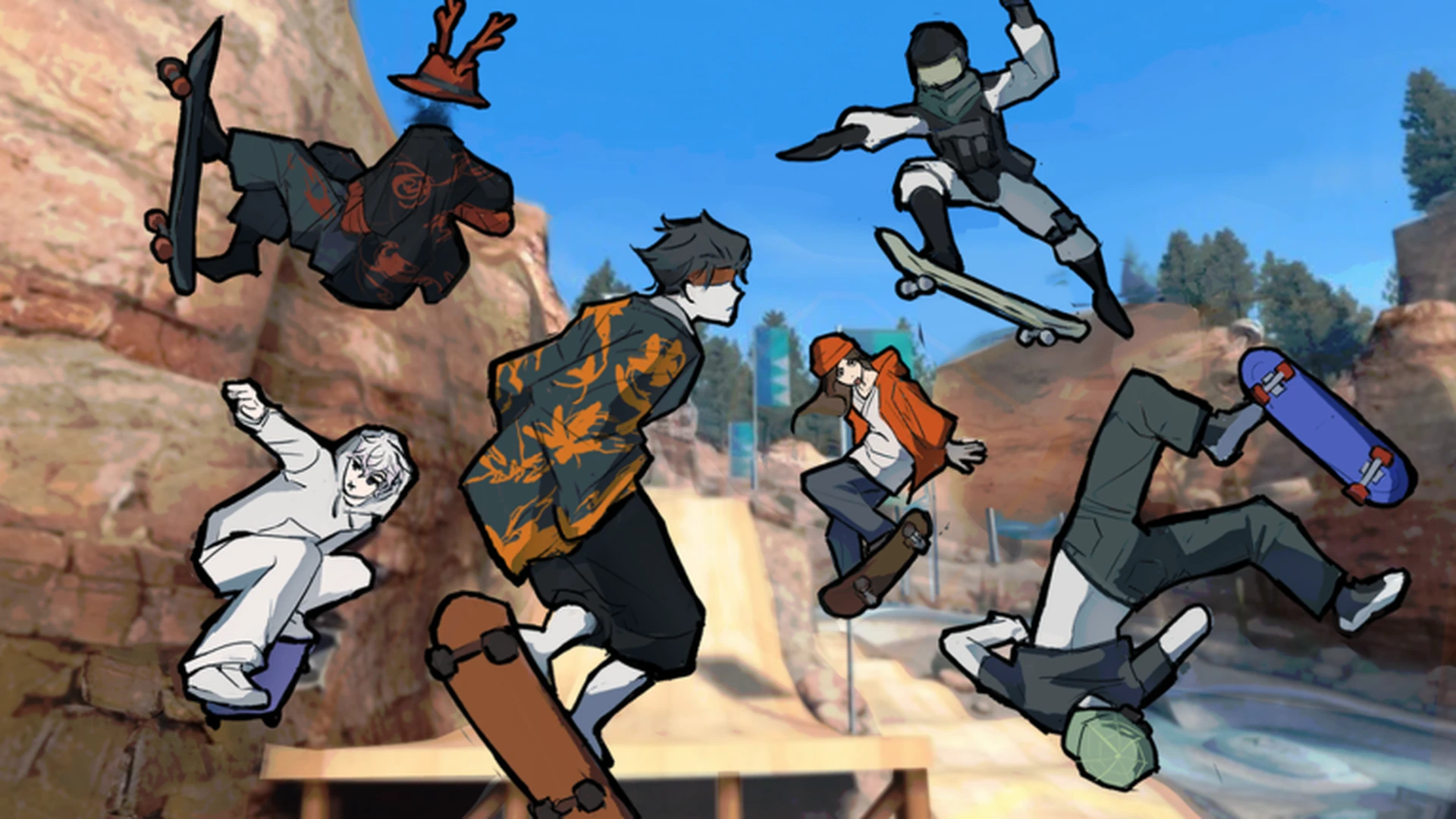
- Skate Tree challenges are objectives you complete while skating, grouped from beginner movement goals to hard technical sequences
- Start with movement challenges first — they teach the controls and reward early progression
- Landing consistency matters more than trick difficulty when choosing what to attempt next
- Multi-obstacle lines and technical sequences are advanced goals best saved until basics feel reliable
- The developer notes the game plays best with a controller
How Skate Tree Challenges Work
Skate Tree is a street skateboarding game on Roblox built around movement, trick execution, and completing objectives across its map. Challenges are the main way to turn free skating into measurable progress: each one asks you to perform a specific movement task, land a trick cleanly, or string a route together, and completing them feeds your overall progression.
The challenge curve follows the same logic as real skateboarding practice. You first prove you can move, turn, jump, and land. Only then do the game's harder objectives — chained tricks and multi-obstacle lines — become realistic targets.
Before attempting any challenge, read the full requirement. Many failed attempts happen because players start a route without enough speed for the final obstacle, or attempt a trick sequence before they can land each trick individually.
Challenge Difficulty Rankings
Challenges in Skate Tree group naturally into four difficulty tiers. Use this table to decide what to attempt based on your current skill level.
| Difficulty | Challenge Type | Requirements | Priority | Reward Focus |
|---|---|---|---|---|
| Beginner | Basic movement objectives | Move through the starting area, control direction, simple jumps | High | Early progression, control practice |
| Beginner | Land basic tricks | Perform individual tricks without losing control | High | Skill development, early objectives |
| Advanced | Multi-obstacle line | Connect several jumps, rails, ledges, or ramps in one route | Medium | Higher-skill progression |
| Hard | Technical trick sequence | Precise movement, timing, and controlled landings across a demanding section | Medium | Advanced completion rewards |
Jumping straight to hard challenges usually leads to repeated failures. New players should complete both beginner tiers first — the reward progress builds while the control practice makes every later challenge easier.
Movement Challenges
- Focus: Direction control, jumping, landing
- Where: Open starting areas
- Best for: Learning the skating physics
- Repeat the same movement until landings feel reliable
Trick Challenges
- Focus: Individual trick execution
- Where: Clear sections of the map
- Best for: Building a trick foundation
- Prioritize timing over speed
Line Challenges
- Focus: Chaining obstacles continuously
- Where: Street spot routes with rails and ramps
- Best for: Experienced players
- Plan the route in sections and keep speed for the final obstacle
Where to Practice for Each Challenge Type
The map shapes which challenges you can realistically attempt. Match your practice location to your current goal.
| Spot Type | Category | Best For | Route Tip |
|---|---|---|---|
| Main Skate Area | Starting Zone | Learning controls, testing board movement, basic tricks | Start with short straight lines before adding turns and jumps |
| Street Spot Routes | Trick Practice | Linking tricks, rails and ledges, longer combinations | Approach with enough speed to clear the obstacle but leave room to recover |
| Open Practice Area | Skill Building | Timing practice, landing consistency | Repeat the same movement several times before changing it |
| Exploration Routes | Free Roam | Learning the map, finding alternate lines | Follow ramps and slopes instead of stopping after each obstacle |
The developer states that Skate Tree is best experienced playing on a controller. If you are struggling with trick timing on keyboard, switching input methods can make landing challenges noticeably easier.
Step-by-Step: Completing Your First Challenges
Follow this order to clear beginner challenges efficiently and set up advanced ones.
Master the movement loop
Move through the starting area, practice turning, jumping, and recovering after landings. Your goal is to travel through the zone without repeatedly losing control.
Complete movement objectives
Finish the beginner-friendly tasks that only require basic movement and simple skating actions. This builds your first supply of progress and rewards.
Land individual tricks cleanly
Move to a clear section of the map and practice single tricks. Focus on timing rather than speed, and only combine tricks once each one lands reliably.
Build route and landing consistency
Repeat familiar routes and practice approaching ramps, obstacles, and landings with controlled timing. Reduce failed attempts before moving on.
Attempt lines and technical sequences
Plan multi-obstacle routes in sections, keep enough speed for the final obstacle, and practice each part of a technical sequence separately before running the full line.
Challenges you can complete consistently are worth more than difficult ones you keep failing. Prioritize objectives within your reliability range, then step up.
Common Challenge Mistakes and Fixes
| Mistake | Why It Fails | Fix |
|---|---|---|
| Attempting hard tricks too early | Landings are unreliable, so sequences break down | Master single tricks in an open practice area first |
| Starting lines without enough speed | Final obstacle becomes impossible to clear | Approach each obstacle fast enough, but leave recovery room |
| Stopping after each obstacle | Line challenges require continuous movement | Follow ramps and slopes to keep momentum through the route |
| Changing input mid-attempt | Muscle memory resets and timing slips | Keep the same approach and timing on every attempt |
| Skipping the objective text | Requirements get missed mid-run | Read the full challenge requirement before starting |
Before Attempting Advanced Challenges:
- Move through the starting area without losing control
- Land every basic trick individually
- Complete at least one beginner movement objective
- Repeat a familiar route with consistent landings
- Plan the line route in sections before starting
Skate Tree is actively updated — movement feel, trick timing, and landing behavior can change between versions. Revisit familiar challenge routes after major updates before assuming a failure is a skill issue.
Skate Tree Challenges FAQ
Q: What are Skate Tree challenges?
They are in-game objectives that ask you to complete movement tasks, land tricks, or string together multi-obstacle lines. Completing them rewards progression and unlocks the path toward more advanced skating content.
Q: Which challenges should I complete first?
Start with the two beginner tiers: basic movement objectives and landing individual tricks. Both have high priority because they teach control while building early rewards, which makes every later challenge easier.
Q: How do I complete a multi-obstacle line challenge?
Plan the route in sections, maintain enough speed to clear the final obstacle, and leave room to recover after each landing. Practice each obstacle separately before running the full line in one continuous attempt.
Q: Do I need a controller for challenges?
No, but the developer states the game is best played on a controller. If trick timing feels difficult on keyboard, switching to a controller can improve landing consistency in challenge runs.