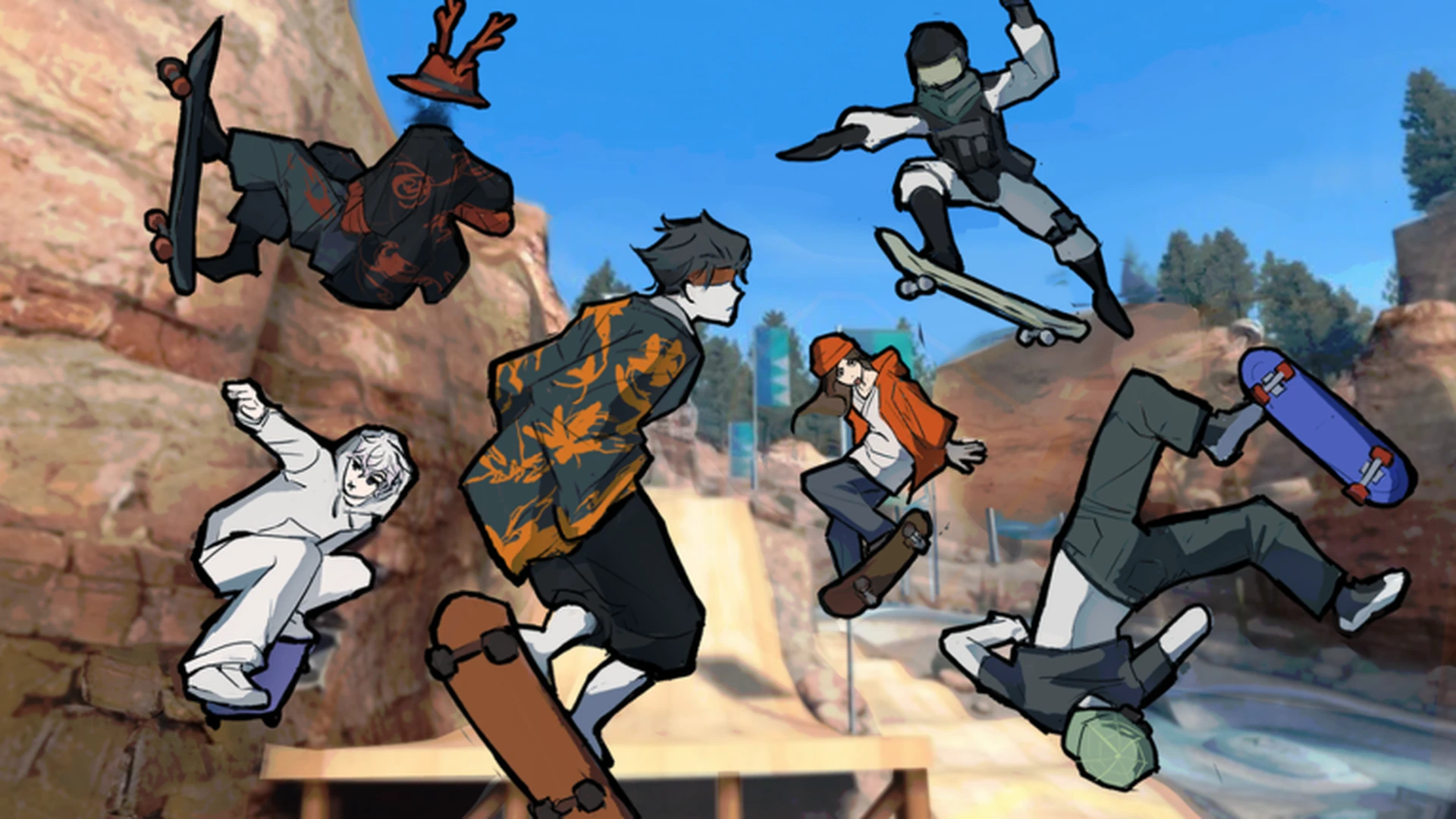
- Skate Tree multiplayer centers on Spot Battles, the game's headline competitive mode
- 12 players per server share the map, so expect traffic on popular spots and rails
- Controller play is recommended by the developer for the best trick and landing control
- 95% positive rating across 1,000+ votes shows the multiplayer loop is landing well
- Consistent landings beat risky tricks in scoring-heavy sessions
How Skate Tree Multiplayer Works
Skate Tree multiplayer is the competitive core of this Roblox skateboarding game. Public sessions hold up to 12 players per server, all skating the same street map at once. The game's public listing is even titled "[SPOT BATTLES] Skate Tree," which tells you the developer treats head-to-head spot competition as the main attraction rather than a side mode.
Because everyone shares one map, multiplayer sessions feel closer to a live skate park than a queue-based arena. You watch other players attempt lines, learn routes by observation, and jump into battles when you're ready. With roughly 690+ players online at once shortly after launch, servers stay populated at most hours.
Spend your first session learning the map in the open practice areas before entering a Spot Battle. Knowing where ramps, rails, and ledges connect is the single biggest advantage in multiplayer.
| Multiplayer Feature | Detail |
|---|---|
| Server size | 12 players max |
| Core mode | Spot Battles |
| Genre | Sports & Racing |
| Release date | October 3, 2026 |
| Developer | RNE Third Vault (Roblox Group) |
| Rating | 95% positive (1,060 up / 55 down) |
| Total visits | 129,000+ |
Spot Battles: The Competitive Mode
Spot Battles is Skate Tree's named multiplayer format. The title itself signals that battles take place at specific "spots" — ramps, rails, ledges, and other skateable features scattered across the map. Winning a battle means out-scoring opponents at the same spot, which rewards players who can chain clean, high-difficulty tricks rather than relying on a single lucky landing.
The scoring philosophy mirrors real street skateboarding battles: consistency and creativity both matter. A player who lands three moderate tricks cleanly will usually outperform someone who attempts one huge trick and bails.
Consistency Play
- Land every attempt
- Moderate-difficulty tricks
- Low risk, steady points
- Best for new battlers
High-Risk Play
- Big single tricks
- Spin and flip combinations
- High reward on landing
- Punishing on failure
Route Play
- Chain obstacles in one line
- Use connected rails and ramps
- Rewards map knowledge
- Strongest mid-game strategy
The developer's own game description states that Skate Tree plays best on controller. If you plan to compete in Spot Battles seriously, practicing on a controller from the start avoids relearning inputs later.
| Battle Strategy | Skill Level | Risk | Reward Potential |
|---|---|---|---|
| Basic trick spam | Beginner | Low | ★★ |
| Clean line linking | Intermediate | Medium | ★★★★ |
| Technical sequences | Advanced | High | ★★★★★ |
| Route speed runs | Intermediate | Medium | ★★★ |
Step-by-Step: Your First Multiplayer Session
Follow this order to go from spawning in to competing without wasting early sessions on failed battles.
Learn the Map Solo
Skate the main open area first. Identify ramps, rails, ledges, and elevation changes before any competition. Watch how other players move between spots — observation is free coaching.
Lock In Basic Landings
Practice jumps, turns, and landings until you can complete a short line without losing control. Landing consistency is the foundation of every scoring system.
Watch a Battle Before Joining
If you can observe an ongoing Spot Battle, note which spots attract competition and which tricks the top scorers repeat. High scorers usually chain rather than gamble.
Enter Your First Spot Battle
Pick a familiar spot and use your most reliable tricks. Your goal for the first several battles is zero bails, not maximum points.
Add Difficulty Gradually
Once you place consistently, layer in one harder trick per line. Increasing difficulty one element at a time keeps your scoring floor high.
If you can complete a full line — ramp, rail or ledge, and clean landing — without bailing three sessions in a row, you're ready to compete at most spots on the map.
Best Multiplayer Spots and Server Strategy
Since all 12 players share one map, spot selection becomes a strategic decision. High-traffic areas near spawn draw the most battles but also the most competition and interference. Outer areas and less obvious transitions give you space to practice lines before bringing them into contested zones.
| Spot Type | Traffic | Best Use | Battle Frequency |
|---|---|---|---|
| Spawn-area ramps | High | Quick warm-up tricks | Very high |
| Street rails and ledges | Medium | Line linking practice | High |
| Elevation-change routes | Medium | Speed and spin tricks | Medium |
| Outer exploration paths | Low | Private practice, hidden lines | Low |
If your current server feels overcrowded or the spots you want are constantly blocked by other players, rejoining places you in a different server. A fresh server often gives you open access to contested spots.
| Situation | Recommended Action |
|---|---|
| Spawn area crowded | Move to outer street sections |
| Opponents bail constantly | Play consistent, collect easy wins |
| Opponents land everything | Shift to your hardest practiced line |
| Empty practice area | Rehearse a new route before battling |
Session Goals Checklist
Use this checklist to structure competitive sessions instead of skating aimlessly. Each item builds directly toward better Spot Battle results.
Multiplayer Session Goals:
- Warm up with 10 clean basic landings
- Watch at least one ongoing Spot Battle
- Complete one full linked line without bailing
- Enter a Spot Battle using only reliable tricks
- Add one new trick to your consistent rotation
Set a personal bail limit per session — for example, stop attempting a trick after three consecutive failures. This prevents frustration spirals and keeps your practice time productive.
Multiplayer FAQ
Q: Is Skate Tree multiplayer or single-player?
Skate Tree is a multiplayer Roblox experience with up to 12 players per server. While you can practice lines solo on a populated map, the headline Spot Battles mode is built around competing against other skaters at shared spots.
Q: How many players can be in one Skate Tree server?
The Roblox API lists Skate Tree's max server size at 12 players. All players share the same map, so popular spots can get crowded during peak hours.
Q: Do I need a controller to compete in Skate Tree multiplayer?
A controller is not required, but the developer's game description explicitly says the game plays best on controller. For competitive Spot Battles, a controller typically gives finer control over steering and landings.
Q: What is the best strategy for winning Spot Battles in Skate Tree multiplayer?
Consistency wins battles. Chain moderate-difficulty tricks you can land reliably instead of gambling on one huge attempt. Players who bail less usually outscore players chasing single high-risk tricks.