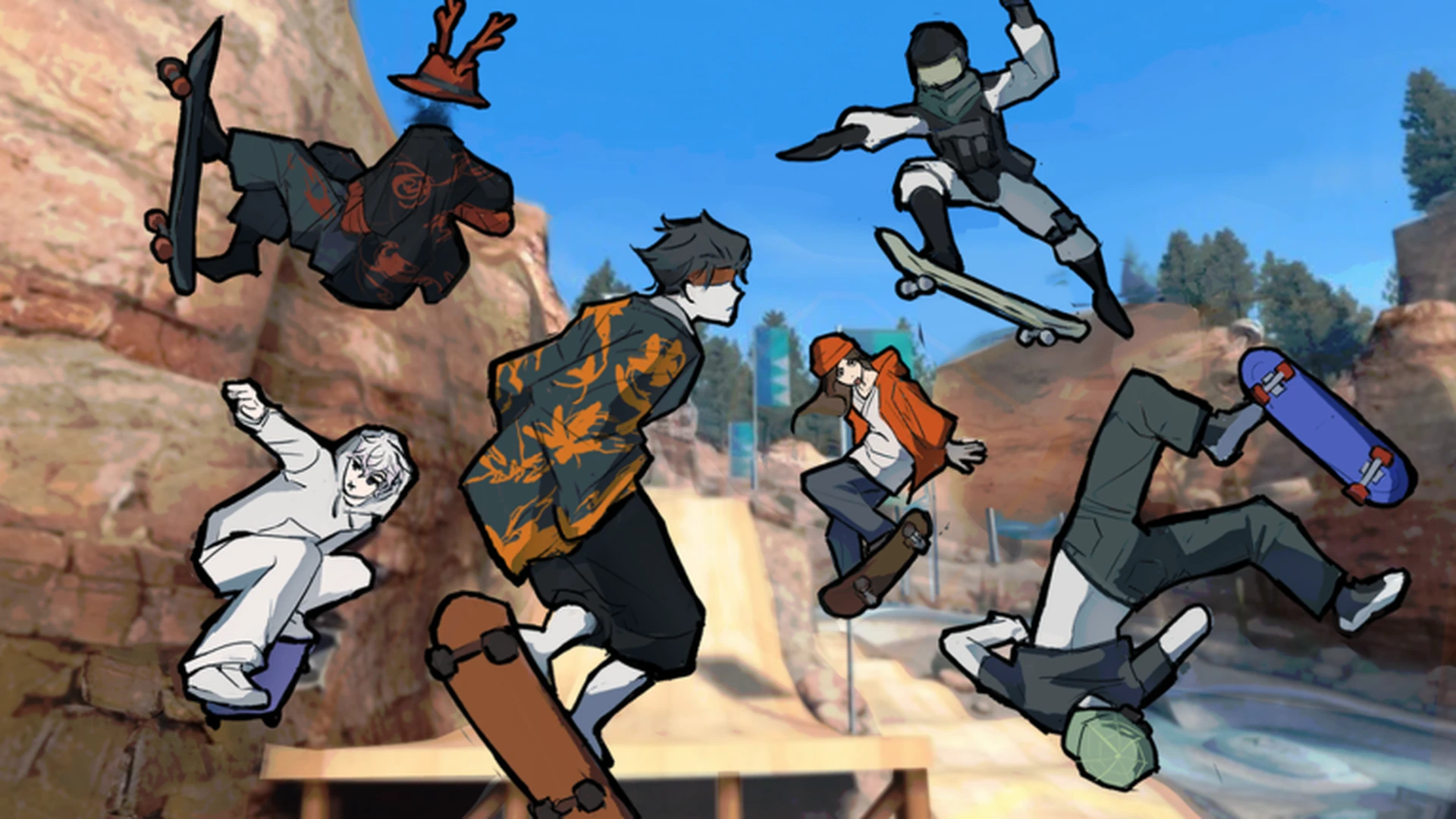
- Skate Tree skate spots are grouped into open starting zones, street routes, practice areas, and hidden lines.
- Start in the Main Skate Area to build movement and landing control before technical spots.
- Street Spot Routes are best for linking rails, ledges, and ramps into longer lines.
- Exploration Routes connect multiple spots and reveal alternate transitions and hidden paths.
- Spot Battles mode turns these same locations into competitive scoring arenas.
Skate Tree Skate Spots Overview
Skate Tree is a Roblox skateboarding game built around exploration and movement, and its map is designed so that every type of player, from first-time riders to combo hunters, has a place to skate. The game's core loop rewards learning the layout: open areas teach control, street sections test trick linking, and off-route paths hide alternate lines. Because the game supports up to 12 players per server and plays best on controller according to the developer, spots can get crowded, so knowing quieter alternatives keeps your sessions smooth.
The map breaks down into four practical categories of skate spots, each serving a different training goal:
| Spot Category | Terrain Focus | Skill Level | Best Use |
|---|---|---|---|
| Main Skate Area | Open flat ground, gentle ramps | Beginner | Learning movement, jumping, landing |
| Street Spot Routes | Rails, ledges, ramps, elevation | Intermediate | Linking multi-trick lines |
| Open Practice Area | Spacious flat sections | Beginner to Advanced | Repeating tricks without pressure |
| Exploration Routes | Connecting paths, slopes, gaps | All levels | Route awareness, continuous movement |
Follow ramps, slopes, and open paths rather than stopping after each obstacle. Skate Tree rewards continuous movement, and many of the best lines only reveal themselves when you carry speed between areas.
Best Spots Ranked by Purpose
Not all spots serve the same purpose. Ranking them by what you want to practice helps you spend session time efficiently instead of wandering between areas that don't match your current goal.
Main Skate Area - Best for Beginners
- Starting zone with open space
- Learn turning, jumping, and landing
- Short straight lines first, then add turns
- Low pressure, ideal for first sessions
Street Spot Routes - Best for Combos
- Rails, ledges, ramps, elevation changes
- Combine obstacles into longer trick lines
- Approach with enough speed to clear each feature
- Leave recovery room after landings
Open Practice Area - Best for Timing
- Spacious, obstacle-free sections
- Repeat the same trick multiple times
- Build landing consistency
- Experiment with movement freely
Exploration Routes - Best for Flow
- Paths connecting the main areas
- Discover alternate lines and transitions
- Build continuous-movement habits
- Reveal quieter corners of the map
A quick difficulty comparison for players planning a session:
| Spot | Difficulty | Combo Potential | Crowd Level | Recommended Session Time |
|---|---|---|---|---|
| Main Skate Area | ★☆☆☆☆ | Low | Medium | 10-15 min warm-up |
| Open Practice Area | ★★☆☆☆ | Medium | Low | 15-20 min drilling |
| Street Spot Routes | ★★★★☆ | High | Medium | 20-30 min lines |
| Exploration Routes | ★★★☆☆ | Medium | Low | 10-15 min cooldown |
Approaching rails and ledges with too little speed causes failed clears, while excessive speed removes your recovery window after landing. Calibrate your approach on the first pass of any new obstacle before committing to a full line.
Spot Battles: Competitive Spot Play
The game's public title, [SPOT BATTLES] Skate Tree, points to its signature mode. Spot Battles turns familiar locations into competitive arenas where players take turns performing at the same spot and compare results. The spots you practice in free skate become the stages for battle, which is why route knowledge translates directly into competitive advantage.
| Battle Focus | What It Rewards | Practice Spot to Prepare |
|---|---|---|
| Trick difficulty | Higher-complexity successful tricks | Street Spot Routes |
| Consistency | Landing tricks reliably under pressure | Open Practice Area |
| Route creativity | Unusual lines and alternate approaches | Exploration Routes |
| Speed control | Clean entries and exits on features | Main Skate Area |
Key battle preparation principles:
- Choose high-success-rate tricks over risky attempts when scores are close.
- Scout the spot in free skate first so entries, speed, and landing zones are known quantities.
- Minimize repetition of failed attempts, since consistency often outweighs one highlight trick.
- Watch opponent lines for approaches you can adapt or counter.
Spot Battles uses the same map as regular skating. Time spent learning spot geometry in free sessions is direct preparation for competitive play, so treat exploration as training rather than downtime.
Route Building: Step-by-Step Line Construction
Building a clean line through multiple Skate Tree spots follows a repeatable process. Work through it each time you target a new route.
Scout the Route in Sections
Skate the planned path slowly and identify every obstacle, transition, and landing zone. Break the line into segments you can evaluate individually before combining them.
Drill Each Obstacle Separately
Practice each rail, ledge, ramp, or jump on its own in the Open Practice Area or at the feature itself until your success rate is reliable.
Calibrate Speed and Entry Angles
Determine the approach speed each obstacle needs. Confirm you can clear features while still controlling the landing, adjusting your line-in path as needed.
Link Two Obstacles, Then Extend
Connect the first two segments, then add one more at a time. Extending gradually keeps failures diagnosable instead of guessing which section broke the line.
Repeat for Consistency
Run the full line several times. A line that only works once is not finished; consistent landings are what translate into Spot Battles performance.
Aim to finish each practice session with at least one full line completed three times in a row. That repetition standard is a strong signal the route is ready for battle play.
Hidden Spots and Exploration Checklist
Skate Tree rewards players who slow down and inspect areas that are easy to skate past. Hidden paths, unusual map interactions, and alternate trick lines are most often found off the main routes.
- Off-route exploration: check side paths, ramps, and less-used transitions around the edges of familiar areas.
- Unusual map interactions: stop near distinctive scenery and try interacting with objects instead of skating past.
- Alternate trick lines: revisit familiar spots and test approaching obstacles from different directions or with more speed.
- Quiet map corners: search isolated platforms and upper levels away from busy routes.
Hidden areas are easier to notice when you explore without trying to complete a trick line. Dedicate occasional sessions purely to map discovery, then return to practice once you've catalogued new routes.
Spot Mastery Checklist:
- Learn every category of spot on the map
- Build one multi-obstacle line through Street Spot Routes
- Land a full line three consecutive times
- Discover at least two off-route transitions
- Win a round in Spot Battles on a practiced spot
Skate Spots FAQ
Q: What are the best Skate Tree skate spots for beginners?
The Main Skate Area and Open Practice Area are the best starting spots. They provide open space for learning movement, turning, jumping, and landing without the pressure of crowded obstacle routes, letting new players build control before moving to technical street sections.
Q: Which spots are best for practicing trick combos?
Street Spot Routes are ideal for combo practice because they combine rails, ledges, ramps, and elevation changes into longer lines. Approach each obstacle with enough speed to clear it while leaving room to recover after the landing.
Q: How do skate spots connect to Spot Battles mode?
Spot Battles uses the same map as regular skating, turning familiar locations into competitive arenas. Practicing entries, speed control, and landings at a spot in free skate directly prepares you to battle there, so route knowledge becomes a competitive advantage.
Q: Are there hidden spots in Skate Tree?
Yes, the map includes off-route paths, unusual interactions, and alternate trick lines that are easy to miss. Explore side paths, isolated platforms, and distinctive scenery, and revisit familiar spots from different approach angles to uncover them.