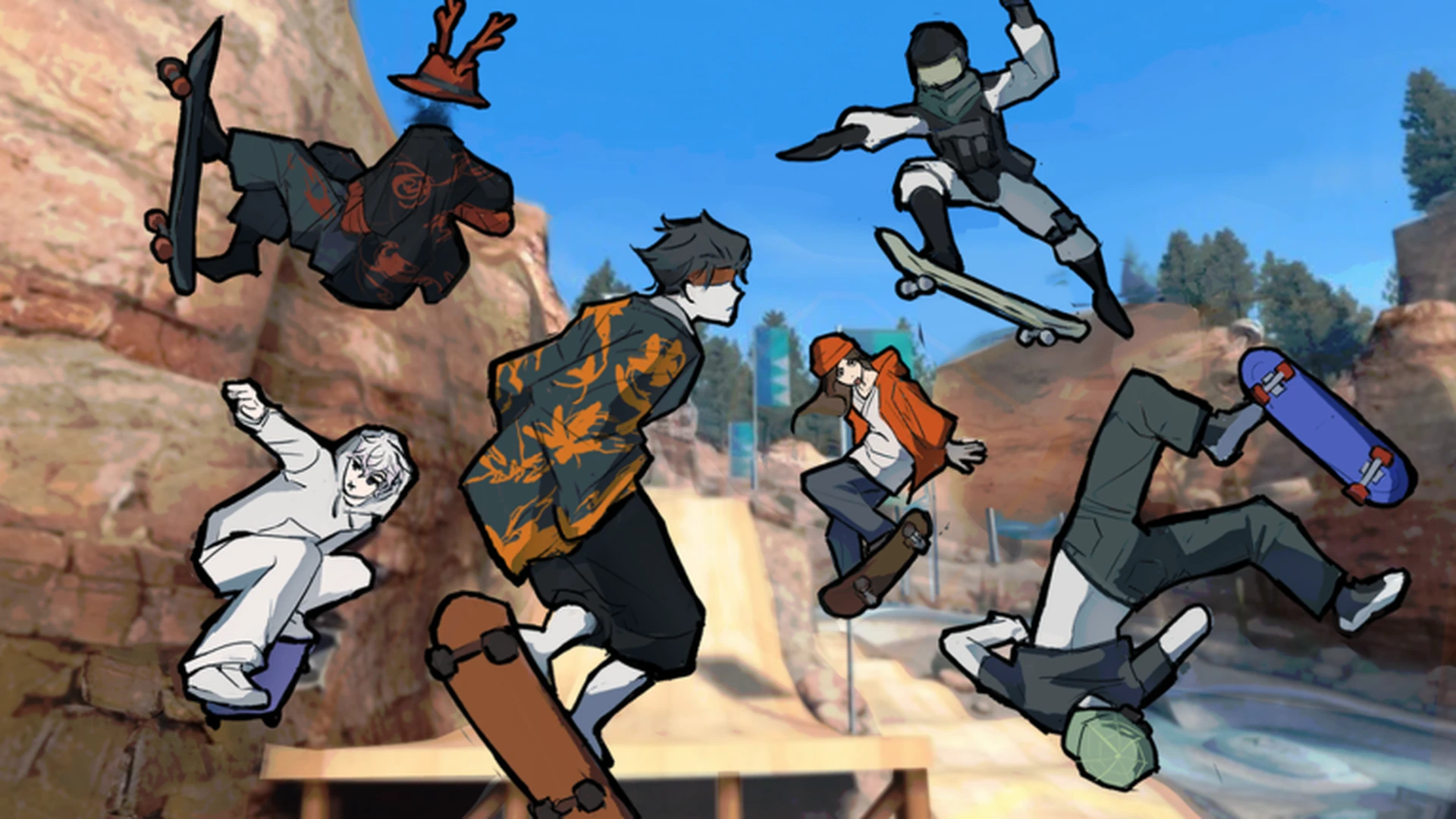
- Skate Tree progression follows five stages: movement, objectives, consistency, advanced challenges, and unlocked content.
- Early game: prioritize landing control and beginner-friendly tasks over difficult tricks.
- Mid game: repeat familiar routes to reduce failed attempts before harder activities.
- Late game: combine jumps, turns, and trick inputs in multi-obstacle lines.
- Controller note: the developer states controller input offers the best experience.
How Progression Works in Skate Tree
Skate Tree is a Roblox skateboarding game built around street spots, trick challenges, and competitive Spot Battles sessions. Progress is skill-driven rather than stat-driven: instead of grinding levels, you improve by learning the movement loop, completing accessible objectives, and using each new reward or unlocked activity to guide the next stage of play. The game launched on Roblox on October 3, 2026, and is developed by the group RNE Third Vault.
Because progression is tied to skating consistency, the roadmap below focuses on what to practice in order. Players who skip straight to technical lines tend to fail repeatedly and waste session time.
Movement Phase
- Goal: control board movement
- Learn moving, turning, jumping
- Practice landing recovery
Objective Phase
- Goal: earn initial rewards
- Complete beginner tasks
- Learn the reward loop
Mastery Phase
- Goal: consistent advanced play
- Chain multi-obstacle lines
- Enter demanding challenges
The official game description notes that Skate Tree plays best on a controller. If you struggle with keyboard input, switching to a gamepad often makes turning and landing feel far more responsive.
Step-by-Step Progression Roadmap
Follow these five stages in order. Each stage has a clear goal that signals when you are ready to move on.
Master the Basic Movement Loop
Become comfortable with moving, turning, jumping, and recovering after a landing before touching difficult challenges. Goal: move through the starting area without repeatedly losing control. Spend time in the main open area testing short straight lines, then add turns and jumps.
Complete Accessible Objectives
Prioritize beginner-friendly tasks that can be finished with basic movement and simple skating actions. Goal: establish an initial supply of progress and rewards while learning how the game pays out for normal play.
Improve Route and Landing Consistency
Repeat familiar routes and practice approaching ramps, obstacles, and landings with controlled timing. Goal: reduce failed attempts before committing to harder activities. Release or adjust inputs before touching down to recover control cleanly.
Attempt Advanced Challenges
Once basic skating feels reliable, begin combining jumps, turns, landings, and trick inputs during more demanding activities. Goal: complete challenges that require multiple actions in one continuous sequence.
Use Unlocked Content as the Next Target
After each milestone, check newly available activities, routes, rewards, or upgrades and choose your next objective from the content now accessible. This keeps progression moving without dead ends.
Do not grind the hardest available challenge early. Repeated failed attempts slow your progress far more than completing several easier objectives consistently first.
Milestone Difficulty Reference
Use this table to judge which challenges to prioritize at your current stage.
| Difficulty | Challenge Type | Requirements | Priority | Strategy |
|---|---|---|---|---|
| Beginner | Basic movement objectives | Move through starting area, control direction, simple jumps | High | Repeat the same movement until landings are reliable |
| Beginner | Land basic tricks | Perform individual tricks without losing control | High | Focus on timing rather than speed in a clear map section |
| Advanced | Multi-obstacle line | Connect several jumps, rails, ledges, or ramps in one route | Medium | Plan the route in sections, keep speed for the final obstacle |
| Hard | Technical trick sequence | Precise movement, timing, and controlled landings | Medium | Practice each obstacle separately before the full run |
The game's public page highlights Spot Battles as a core mode. Enter battles only after Stage 3, when your landing consistency is high enough to avoid handing your opponent easy openings.
Where to Practice: Spots by Progression Stage
Matching your practice location to your skill stage accelerates improvement. The map below summarizes which areas suit which goals.
| Spot Type | Category | Best For | Route Tip |
|---|---|---|---|
| Main Skate Area | Starting Zone | Learning controls, basic tricks | Short straight lines first, then add turns and jumps |
| Street Spot Routes | Trick Practice | Rails, ledges, longer combinations | Approach with enough speed, leave room to recover |
| Open Practice Area | Skill Building | Timing, landing consistency | Repeat the same movement several times before changing |
| Exploration Routes | Free Roam | Map knowledge, alternate lines | Follow ramps and slopes instead of stopping after obstacles |
Early Sessions
- Focus: control and confidence
- Stay in open areas
- Repeat simple lines
Later Sessions
- Focus: chaining and speed
- Move to street routes
- Explore off-route paths
Hidden paths and alternate trick lines are easier to notice when you explore without trying to complete a trick line. Dedicate part of each session to free roaming.
Progression Habits and Session Checklist
Consistent habits matter more than long sessions. Track your readiness with this checklist before advancing stages.
Ready to Advance? Verify These:
- Skate the starting area without losing control
- Completed available beginner objectives
- Land the same trick reliably across five attempts
- Connected at least three obstacles in one line
- Checked newly unlocked content after the last milestone
| Habit | Why It Helps | Recommended Frequency |
|---|---|---|
| Warm-up laps | Restores timing before hard attempts | Start of every session |
| Route repetition | Builds muscle memory for landings | 3-5 runs per route |
| Free roam exploration | Reveals alternate lines and hidden paths | Weekly |
| Update check | New content may shift the optimal path | After each patch |
Restart the game after an update so new fixes and content load correctly, then revisit familiar routes to feel whether movement or landing behavior changed.
FAQ
Q: How does progression in Skate Tree work?
Skate Tree progression is skill-based. You advance by mastering the movement loop, completing accessible objectives, improving landing consistency, and then using unlocked activities and rewards to guide the next stage of play.
Q: Should I use a controller in Skate Tree?
Yes. The official game description states the experience is best on a controller. The left stick provides smoother steering, and centered stick input makes landing recovery easier than keyboard input for many players.
Q: When should I start attempting advanced challenges?
Move to advanced challenges once basic skating feels reliable and you can complete the same route without failed attempts. Practicing each obstacle separately before attempting the full sequence also reduces frustration.
Q: What should I do after finishing a milestone?
Check the newly available activities, routes, rewards, or upgrades and pick your next objective from that unlocked content. Keeping the newest accessible challenge as your target maintains steady progression.