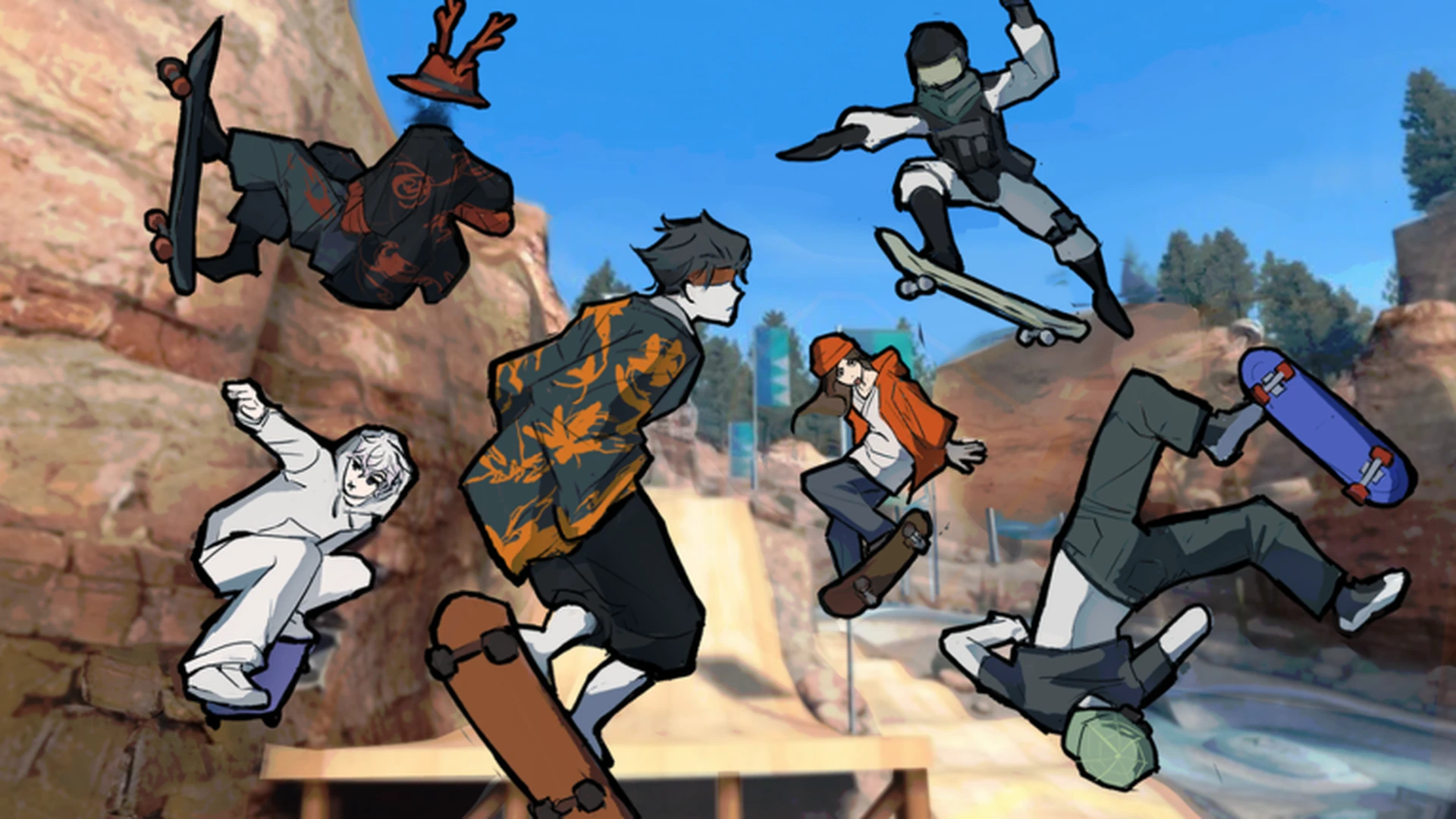
- Grinding in Skate Tree means sliding along rails and ledges after a controlled jump onto the edge.
- Speed and approach angle decide whether you lock onto the rail or bounce off it.
- Start on low ledges in open practice areas before attempting long street rails.
- Balanced landings after a grind keep your line alive for chained tricks.
- Controller play is recommended by the developer for the best movement feel.
Grinding Basics: What a Grind Requires
A grind in Skate Tree is any trick where your board slides along a rail, ledge, or coping instead of rolling on the ground. Grinding is one of the core mechanics that separates clean street lines from disconnected single tricks, because a successful grind lets you carry speed into the next obstacle. Before attempting rails, you need three fundamentals in place: reliable jumping, controlled steering, and consistent landings.
The key variables behind every grind are your approach speed, your angle toward the rail, and your timing at takeoff. Too little speed and the board stalls on contact. Too much speed at a bad angle and you overshoot the rail entirely. Follow the game's on-screen prompts, since exact inputs depend on whether you play on keyboard or controller.
| Grind Factor | What It Does | Common Mistake | Difficulty |
|---|---|---|---|
| Approach speed | Determines whether you reach and slide along the rail | Approaching too slowly and stalling | Basic |
| Approach angle | Decides if the board locks onto the edge | Hitting the rail at a sharp sideways angle | Basic |
| Takeoff timing | Sets where on the rail you land | Jumping too early or too late | Intermediate |
| Balance control | Keeps the grind stable along the slide | Over-steering during the grind | Intermediate |
| Exit landing | Preserves speed for the next trick | Leaning hard into the touchdown | Advanced |
Practice on low, flat ledges in an open practice area before moving to elevated rails. Low ledges forgive mistakes and let you repeat the same approach dozens of times without long recovery walks.
Step-by-Step: How to Land Your First Grind
This sequence follows the same progression used for all trick learning in Skate Tree: control first, timing second, style later. Repeat each step until it feels consistent before moving to the next one.
Scout the Rail
Skate past the rail or ledge at normal speed without jumping. Note its length, height, and what comes after it so you know where your landing zone sits.
Set Your Approach Line
Line up with the rail several meters back so you approach it as parallel as possible. A straight, parallel approach is the single biggest factor in locking onto the grind.
Time the Jump
Jump when the rail is close enough that your board lands on top of it, not before it. Use the same jump timing you practiced on flat-ground jumps first.
Stay Centered on the Slide
Keep directional input neutral and deliberate while sliding. Small corrections work; large stick movements or key presses will kick you off the edge.
Exit and Land Clean
Release or adjust inputs before the end of the rail, center the board, and absorb the landing. A clean exit keeps your momentum for the next obstacle in the line.
The most common failure is jumping with too much speed at a shallow angle. If you keep flying past the rail, slow your approach slightly and jump a fraction earlier rather than changing your whole line.
Best Spots to Practice Grinding
Skate Tree's map is built around street-style sections where rails, ledges, ramps, and elevation changes connect into longer lines. Each area type suits a different stage of grind practice.
Main Skate Area
- Best for first grinds
- Low ledges and open space
- Easy recovery after failed attempts
Street Spot Routes
- Rails and ledges linked together
- Ideal for grind-to-grind lines
- Requires steady speed control
Open Practice Area
- Repeatable timing drills
- No traffic or obstacle pressure
- Great for landing consistency
| Spot Type | Grind Difficulty | Best Use | Recommended Speed |
|---|---|---|---|
| Flat ledges | ★★☆☆☆ | Learning lock-on and balance | Moderate |
| Low handrails | ★★★☆☆ | First real rail grinds | Moderate to fast |
| Long street rails | ★★★★☆ | Sustained slides, line building | Fast and steady |
| Ledge-to-rail combos | ★★★★★ | Advanced chained grinds | Fast with planned exits |
Follow ramps, slopes, and open paths between spots instead of stopping after each obstacle. Grinding works best as part of a continuous line, and route knowledge is what makes lines possible.
Common Grind Mistakes and Fixes
Most failed grinds come from a handful of fixable habits. Diagnose which one matches your attempts and apply the matching correction before changing anything else.
| Symptom | Likely Cause | Fix |
|---|---|---|
| Board stops dead on the rail | Approach speed too low | Build more speed before the jump |
| You fly over the rail entirely | Jump too early or too much speed | Delay the jump, ease off speed |
| Board slides off the side | Approach angle not parallel | Line up earlier and straighter |
| Grind ends in a fall | Over-steering during the slide | Keep inputs neutral, small corrections |
| Landing after grind breaks the line | Hard lean at touchdown | Center inputs before the rail ends |
A simple grind you can land nine times out of ten is worth more in Spot Battles than a flashy grind you land once. Prioritize repeatability first, then raise the difficulty.
Grind Practice Checklist
Work through this checklist over a few sessions. Each item builds directly on the one before it.
Grind Training Goals:
- Land a flat-ledge grind five times in a row
- Complete a full low handrail slide
- Exit a grind with a clean, controlled landing
- Chain a grind into a jump on the next obstacle
- Complete a multi-obstacle line including one grind
Grinding FAQ
Q: How do I grind in Skate Tree?
Approach a rail or ledge parallel to it, jump when it is close enough for your board to land on the edge, keep your directional inputs neutral during the slide, and adjust your inputs before landing. Exact prompts are shown in-game and differ between keyboard and controller.
Q: Do I need a controller to grind in Skate Tree?
No, but the developer notes that Skate Tree plays best on a controller. The left stick gives finer steering control during grinds, which many players find easier for balance corrections than keyboard input.
Q: Why does my board keep sliding off the rail?
This almost always comes down to approach angle. If you reach the rail at a sideways angle, the board will not lock on. Line up parallel several meters before the rail and hold that line through takeoff.
Q: What is the best spot to learn grinding in Skate Tree?
Start in the Main Skate Area on flat, low ledges where mistakes are cheap to recover from. Once ledge grinds feel consistent, move to the Street Spot Routes to practice longer rails and chained grind lines.