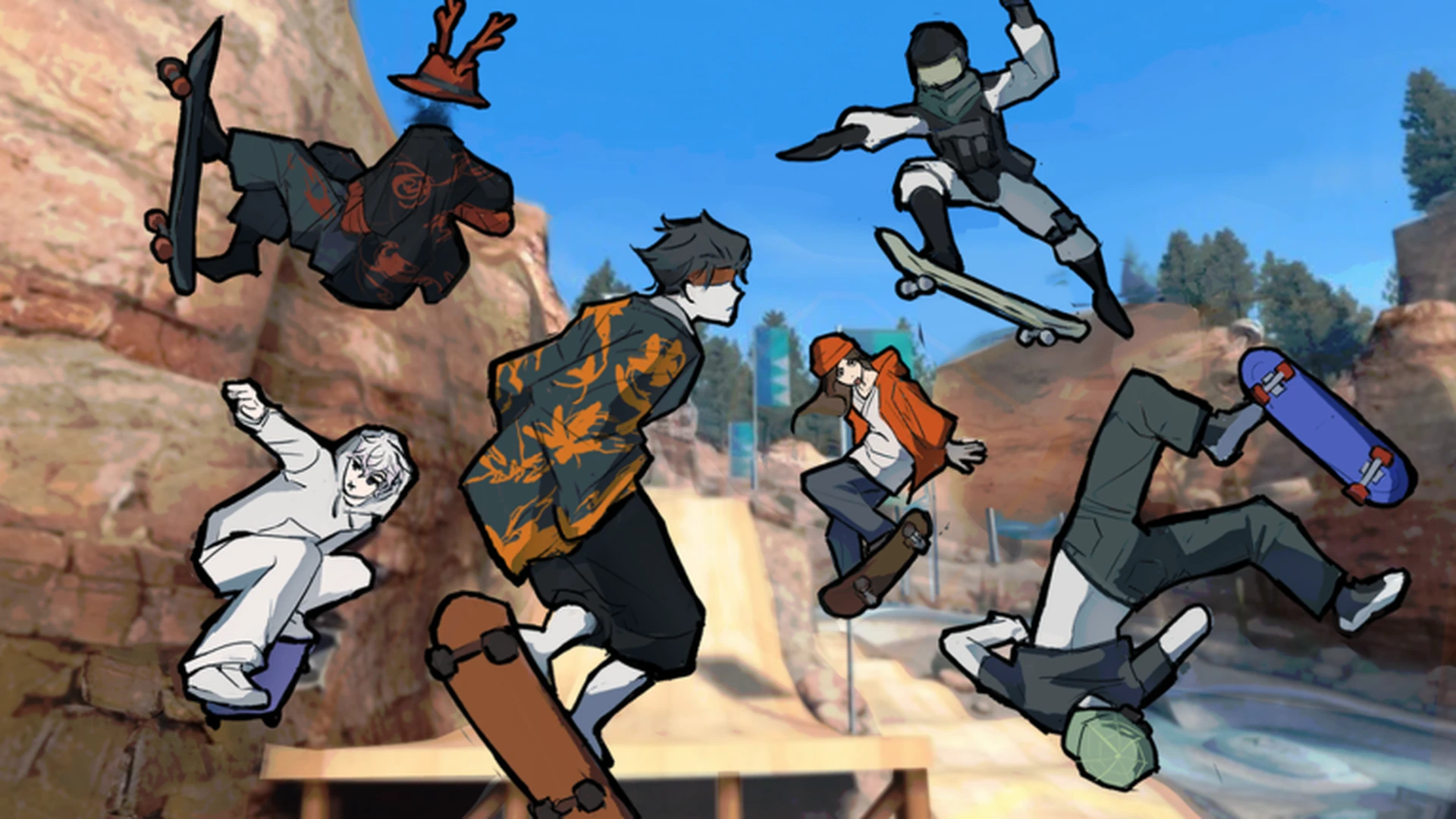
- Skate Tree trick list: Moves progress from movement basics to linked street lines.
- Difficulty tiers: Basic (move, jump, turn), Intermediate (landings, single tricks), Advanced (multi-obstacle lines).
- Best practice order: Master landings first, then individual tricks, then combinations.
- Controller note: The developer states controller play offers the best experience.
- Spot Battles: Trick consistency matters more than difficulty when scoring in battles.
Skate Tree Trick List Overview
Skate Tree is a Roblox street skateboarding game built around spots, trick challenges, and Spot Battles. Because the game launched recently (October 2026) and its trick inputs follow on-screen prompts rather than fixed combos, this trick list organizes moves by function and difficulty so you can build a practice plan regardless of your input device.
Skate Tree does not use a single published combo notation. Trick inputs appear as on-screen prompts for keyboard and controller. Follow the prompt timing rather than memorizing fixed button sequences.
| Trick Category | What It Covers | Input Source | Difficulty |
|---|---|---|---|
| Movement | Rolling, steering, speed control | Movement keys / left stick | Basic |
| Jumping | Flat jumps, ramp takeoffs | Jump key / jump button | Basic |
| Turning | Direction changes at speed | Movement input / left stick | Basic |
| Landing | Recovery after jumps and tricks | Release inputs, center stick | Intermediate |
| Single Tricks | Air tricks, spins per on-screen prompts | Follow trick prompts | Intermediate |
| Trick Lines | Chained tricks across obstacles | Combines all inputs | Advanced |
Basic Tricks: Movement, Jumps, and Turns
Every line in Skate Tree starts with clean fundamentals. Before attempting prompts-based tricks, you should be able to roll through the main skate area without losing control, jump consistently from both flat ground and ramps, and steer while maintaining speed.
Movement Control
- Foundation for all tricks
- Practice straight lines first
- Add gentle turns as speed builds
Ramp Jumps
- Approach with steady speed
- Take off straight, not angled
- Keep inputs simple in the air
Steering at Speed
- Small inputs, big results
- Avoid over-steering on ramps
- Reset direction between obstacles
New players often attempt difficult tricks before landings are reliable. A clean landing on a simple jump scores and builds more consistency than a failed advanced attempt. Stay in open areas until basic jumps land reliably.
Intermediate Tricks: Landings and Single Trick Prompts
The intermediate tier is where the Skate Tree trick list starts rewarding timing. Landing control separates players who can land a trick from players who can chain one. Release or adjust inputs before touchdown on keyboard, and center the stick on controller to prepare for contact.
| Intermediate Skill | How to Execute | Practice Spot | Success Sign |
|---|---|---|---|
| Controlled landing | Adjust inputs before touchdown | Open practice area | No wobble or loss of speed |
| Flat-ground trick | Follow trick prompt mid-jump | Main skate area | Clean landing 8 of 10 tries |
| Ramp air trick | Jump from ramp, follow prompt | Any ramp line | Trick registers before landing |
| Rail or ledge approach | Enough speed to clear, room to recover | Street spot routes | Consistent entry angle |
| Spin control | Steer during airtime, straighten before landing | Open practice area | Landing in intended direction |
Focus on timing rather than speed when learning a new trick. A slower, well-timed attempt teaches the correct window; a rushed one teaches bad habits.
Advanced Tricks: Lines and Technical Sequences
Advanced skating in Skate Tree means linking multiple actions into one continuous run. Street spot routes with rails, ledges, ramps, and elevation changes are the natural home for these lines, and they also feed directly into Spot Battles scoring.
Plan the Route in Sections
Break the line into takeoff, obstacle, and landing zones. Identify where speed must be maintained for the final obstacle.
Practice Each Obstacle Separately
Land each trick in the line on its own until the success rate is high. Only then connect two obstacles, then three.
Chain With Controlled Speed
Approach with enough speed to clear each obstacle but enough control to adjust the landing angle for the next one.
Add Trick Prompts Into the Line
Insert prompted tricks during airtime between obstacles, keeping the simplest trick on the hardest landing.
Repeat for Consistency
Run the same line repeatedly. In Spot Battles, a consistent medium-difficulty line outperforms an unreliable hard one.
In Spot Battles mode, choose high-success-rate tricks and stable routes over flashy attempts. Reducing mistakes across turns is the most reliable path to higher scores.
Practice Plan and Checklist
Use this checklist to track your progress through the trick list. Each milestone builds directly on the previous one, so complete items in order.
Trick List Milestones:
- Roll the main skate area without losing control
- Land flat jumps consistently on both feet zones
- Steer and recover direction at full speed
- Complete a prompted trick with a clean landing
- Clear one rail or ledge with a stable approach
- Chain three obstacles in a single continuous line
| Goal | Recommended Area | Focus | Est. Practice Focus |
|---|---|---|---|
| First clean landing | Main skate area | Input release timing | Short sessions |
| First prompted trick | Open practice area | Prompt windows | Repeat same jump |
| First rail line | Street spot routes | Entry speed and angle | Sectioned practice |
| First full line | Connected street routes | Speed management | Full-run repetition |
| Battle-ready set | Any battle spot | Consistency under pressure | Scored runs |
Return to familiar spots after improving. Routes that felt too fast early on often become the best lines once your landings are consistent, and alternate approaches may unlock new trick opportunities.
FAQ
Q: Is there an official Skate Tree trick list with exact button combos?
No fixed combo notation has been published. Skate Tree presents trick inputs as on-screen prompts for keyboard and controller, so this trick list organizes moves by category and difficulty instead of button sequences.
Q: Should I play Skate Tree with a keyboard or a controller?
The developer notes that playing on a controller offers the best experience. Both input methods work, but the left stick gives finer steering control for landings and lines.
Q: What is the best order to learn Skate Tree tricks?
Start with movement and jumps, then landings, then single prompted tricks, and finally chained lines. Mastering landings before tricks is the fastest overall path.
Q: Which tricks score best in Spot Battles?
Consistent, high-success-rate tricks on stable routes tend to score more reliably than difficult attempts that fail. Plan your line in sections and protect the final landing.