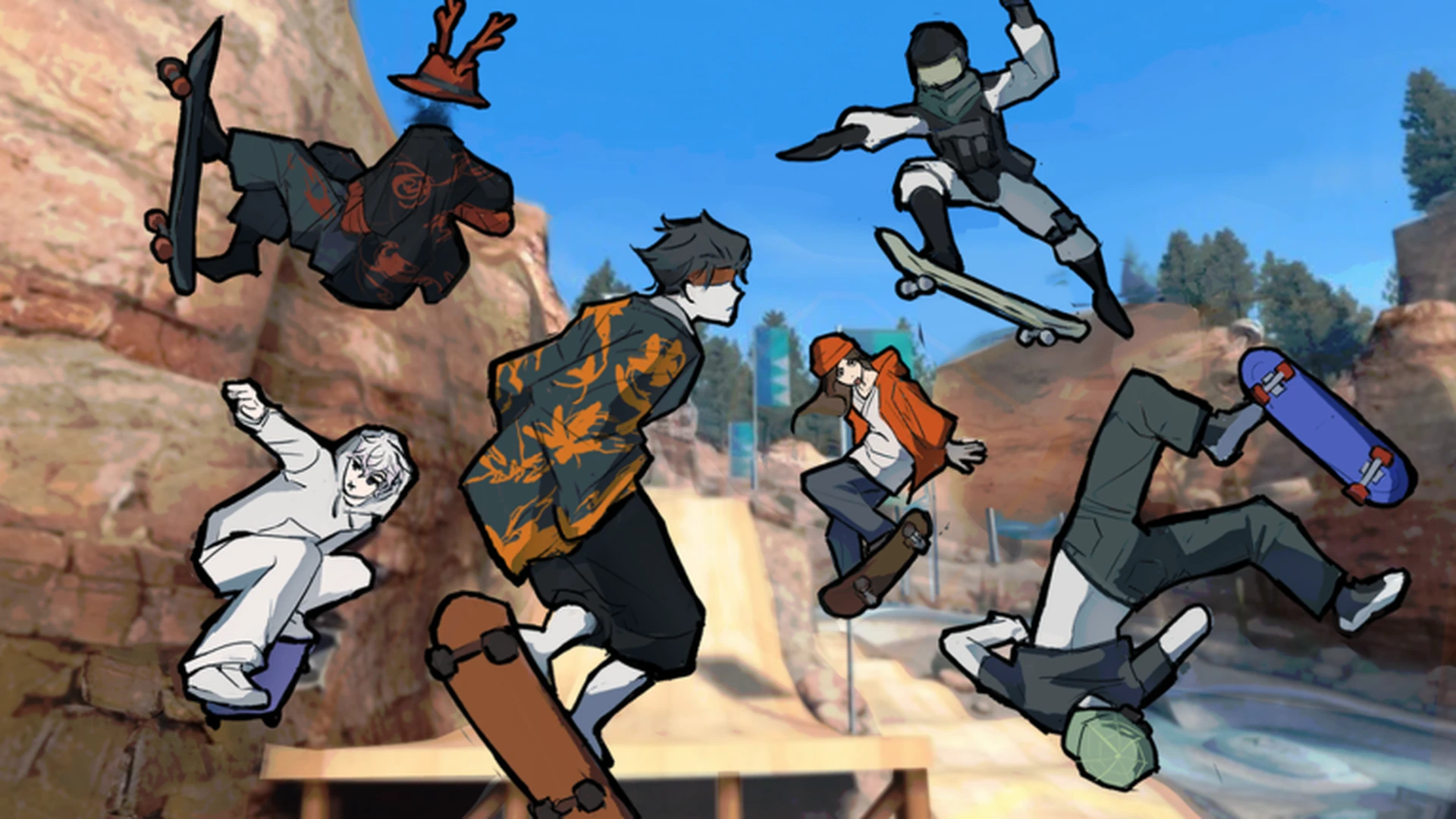
- Skate Tree tricks are built from movement, jumping, steering, and controlled landings combined into lines.
- Start with basics: master straight jumps and smooth landings before adding rotations or combo attempts.
- Practice in the open area first, then move to street spots with rails, ledges, and ramps.
- Consistency beats difficulty: repeat the same route until landings are reliable.
- Controller play is noted by the developer as the best-experience input method.
Skate Tree Tricks Overview
Skate Tree is a Roblox street skateboarding game centered on spots, trick challenges, and Spot Battles. Every trick follows the same foundation: approach with speed, time the jump, control the rotation or input mid-air, and land cleanly. Before attempting anything advanced, you need reliable control of the basic movement loop. The table below breaks the trick system into difficulty tiers so you know exactly where to start.
| Tier | Trick Type | What You Combine | Best Practice Location |
|---|---|---|---|
| Basic | Straight jump | Speed + jump timing | Main open skate area |
| Basic | Turning while moving | Steering + speed control | Open practice area |
| Intermediate | Controlled landing | Input release before touchdown | Any flat section |
| Intermediate | Ramp airs | Ramp approach + jump timing | Street spot routes |
| Advanced | Multi-obstacle lines | Jumps, rails, ledges in sequence | Connected street routes |
| Advanced | Technical trick sequences | Precise timing + recovery | Hard challenge sections |
Movement First
- Left stick / movement keys steer the board
- Learn speed control early
- Foundation for every trick
Jump Timing
- Time jumps at ramp edges
- Release inputs before landing
- Center the stick on touchdown
Combo Building
- Link tricks into continuous lines
- Maintain speed between obstacles
- Practice sections separately
Do not rush into long combos. A single clean, repeatable trick earns more consistent progress than a difficult line you land once out of twenty attempts.
Step-by-Step Trick Progression
Follow this order to build tricks on top of each other. Each step assumes you can reliably perform the previous one, so do not skip ahead if your landings are still inconsistent.
Master the Basic Movement Loop
Move through the starting area, practice steering, and get comfortable accelerating and slowing down. Your goal is to travel the main skate area without losing control. This is the base every Skate Tree trick is built on.
Nail Straight Jumps and Landings
Practice flat-ground jumps with clean timing. Release or adjust your inputs before touching down, and center the stick if you are on a controller. Repeat until landings feel automatic.
Add Ramps and Airs
Take your jump timing to ramps. Approach with enough speed to clear the obstacle, but leave room to recover after landing. Start small and build up to larger ramps.
Combine Tricks into Lines
Move to street spot routes and connect two obstacles, then three. Plan the route in sections and keep enough speed for the final obstacle so the line does not stall halfway.
Attempt Technical Sequences
Once basic skating feels reliable, combine precise movement, timing, and controlled landings across demanding sections. Practice each obstacle separately before attempting the full sequence.
Most failed tricks come from insufficient speed on approach or holding inputs during landing. Fix these two habits first before blaming the trick itself.
Best Practice Spots by Trick Type
Where you practice matters as much as what you practice. Match each trick family to the spot type that supports it so you are not fighting the environment while learning.
| Spot Type | Category | Best Trick Focus | Difficulty |
|---|---|---|---|
| Main Skate Area | Starting Zone | Basic jumps, turning, landing control | ★☆☆☆☆ |
| Street Spot Routes | Trick Practice | Rails, ledges, linked combos | ★★★☆☆ |
| Open Practice Area | Skill Building | Timing reps, landing consistency | ★★☆☆☆ |
| Exploration Routes | Free Roam | Continuous movement, alternate lines | ★★★☆☆ |
Follow ramps, slopes, and open paths instead of stopping after each obstacle. Continuous movement builds the route awareness you need for Spot Battles, where scores reward linked action rather than isolated tricks.
Trick Training Milestones:
- Travel the main area without losing control
- Land 10 straight jumps in a row cleanly
- Clear a small ramp with a controlled landing
- Link two obstacles in one continuous line
- Complete a full street route without stopping
Using Tricks in Spot Battles
Spot Battles is the competitive mode advertised in the game's title, and it rewards the same skills you build in free practice. High-scoring sessions come from choosing tricks you can land consistently, reading your opponent's route, and minimizing failed attempts. A conservative line you complete beats an ambitious line you bail on.
| Battle Strategy | How It Works | Priority |
|---|---|---|
| Consistent trick selection | Pick tricks with a high personal success rate | High |
| Route reading | Watch opponent lines and choose alternate obstacles | Medium |
| Speed management | Keep enough speed for the final obstacle | High |
| Failure reduction | Bail less by simplifying mid-line tricks | High |
Revisit earlier practice areas after improving your control. Routes that felt impossible during your first sessions often become reliable scoring lines once your landing timing improves.
FAQ
Q: What is the best way to start learning Skate Tree tricks?
Begin in the main open skate area with movement, straight jumps, and landing control. Do not attempt rails, ledges, or combos until you can land basic jumps consistently, because every advanced trick reuses those fundamentals.
Q: Should I use a controller for tricks in Skate Tree?
The developer notes that playing on a controller offers the best experience. Use the left stick for steering, keep inputs deliberate, and center the stick before touchdown for cleaner landings.
Q: How do I stop failing landings?
Release or adjust your inputs before touching down instead of holding them through the landing, and make sure you approach obstacles with enough speed. These two fixes resolve most failed attempts.
Q: How do I combine tricks into longer lines?
Practice each obstacle in the route separately first, then connect them in sections while maintaining enough speed for the final obstacle. Build from two-obstacle lines upward rather than attempting a full route immediately.